Call:056 396 9006

Aluminum vs Wooden Pergolas: What Works Best in Dubai Climate? (Ultimate 2026 Guide)
LASER CUTTING SHARJAHLASER CUTTING DUBAICNC SERVICE SHARJAH
2/3/20268 min read
Aluminum vs Wooden Pergolas: What Works Best in Dubai Climate? (Ultimate 2026 Guide)
Outdoor living in Dubai has transformed from a luxury option into a core part of how people enjoy their homes. Gardens, patios, pool decks, rooftops, and outdoor lounge areas have become essential extensions of interior living space, driving homeowners to invest in terraces, shade structures, landscaped retreats, and pergolas that make Dubai’s year-round sunshine more enjoyable.
When it comes to shaded outdoor structures, two of the most popular and enduring choices are aluminum pergola Dubai designs and wooden pergola Dubai installations. Both materials have their place, and both have distinct advantages and drawbacks — especially within the context of Dubai climate, which presents unique challenges: blistering heat, intense UV exposure, occasional rainstorms, humidity near the coast, and dusty winds.
In this comprehensive guide, we compare aluminum pergola vs wooden pergola in every way that matters — performance in heat, durability, maintenance, cost, design flexibility, comfort, and long-term value — to help you decide which works best for Dubai homes and outdoor spaces in 2026.
Understanding Dubai Climate and Why Material Choice Matters
Before we compare materials directly, it’s important to understand what makes Dubai climate so demanding for outdoor structures.
Dubai summers are long and severe. Temperatures consistently exceed 40°C (104°F), often reaching the mid-40s in peak summer. UV radiation is intense year-round, and although rain is rare, when it occurs it is usually heavy and brief. Coastal humidity and salt spray near the sea also affect some materials, accelerating corrosion and wear if materials are not properly specified.
Wind and fine desert dust add another layer of environmental stress, abrading surfaces over time and accumulating in shade structures that resist airflow.
All these factors make the choice between an aluminum pergola Dubai and a wooden pergola Dubai far more consequential than in milder climates. The material you choose affects not just aesthetics, but comfort, lifespan, maintenance, and overall return on investment.
What Is an Aluminum Pergola?
An aluminum pergola Dubai refers to a pergola structure where the primary framing (posts, beams, rafters, and roof system) is made from aluminum or aluminum alloys. Modern aluminum pergolas are engineered with precision, often featuring powder-coated finishes for UV resistance and corrosion control.
In Dubai, aluminum pergolas are commonly designed with:
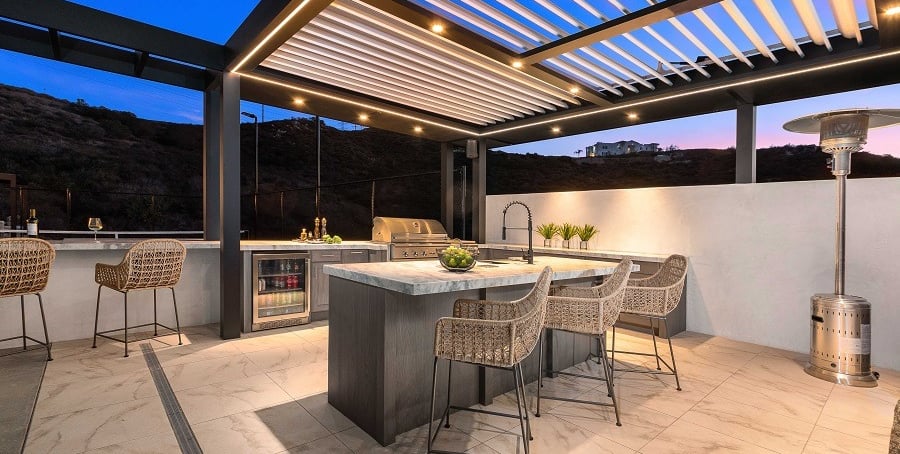
Slatted or louvered roofing (often motorized) that allows adjustable control of sunlight and shade
Powder-coated protective finishes to prevent fading and corrosion
Integrated LED lighting and ceiling fans
Compatible accessories like screens, misting systems, and retractable shades
Aluminum as a material is inherently lightweight yet strong, and it resists rust and termite damage — traits that make it naturally suited to the Dubai climate.
What Is a Wooden Pergola?
A wooden pergola Dubai refers to an outdoor shade structure constructed primarily of wood. Traditional wooden pergolas have been used for centuries around the world to provide partial shade and aesthetic appeal.
Common woods used for pergolas include:
Cedar — aromatic, naturally resistant to insects and decay
Teak — highly durable and weather-resistant but expensive
Ipe or hardwoods — extremely dense and strong
Pressure-treated pine — more affordable but requires frequent maintenance
Wooden pergolas offer warmth, texture, and natural beauty that aluminum simply can’t replicate. However, wood is organic — meaning it expands, contracts, and reacts to moisture, humidity, insects, and UV exposure over time.
Aluminum Pergola vs Wooden Pergola: Performance in Dubai Heat
One of the most important questions for homeowners in Dubai is how each material performs under relentless sun and high temperatures.
Aluminum pergola Dubai installations excel in heat performance. Aluminum doesn’t warp, expand, or crack under intense heat the way wood can. Powder-coated finishes protect the metal from UV degradation, and the material stays relatively stable even after years of sun exposure.
In contrast, wooden pergola Dubai designs — especially those using softer or lower-grade woods — will gradually dry out, shrink, crack, or check from rapid heating and cooling cycles. Even high-grade woods like teak or Ipe can experience surface cracking over years of thermal stress.
From a pure heat-resilience perspective, aluminum pergolas outperform wooden pergolas in Dubai, maintaining structural stability and surface integrity with far less material fatigue.
Shade Quality and Comfort: Aluminum vs Wood
Shade quality isn’t just about blocking sunlight — it’s about how heat radiates into the shaded space.
An aluminum pergola Dubai often features adjustable louvers that can be angled to block direct sun while still allowing airflow. This means shaded areas under aluminum pergolas can feel cooler and more comfortable than under fixed wood slats. Modern motorized systems allow homeowners to tweak the angle throughout the day — blocking afternoon sun and opening up for evening breezes.
A wooden pergola Dubai typically has fixed slats or beams. While wood can provide beautiful dappled shade, it lacks the adaptability of a motorized aluminum system. During peak heat, fixed wood slats can still allow significant heat penetration, and without adjustable features, the comfort level is limited.
When comfort is measured in how cool and pleasant the shaded space feels, aluminum pergolas tend to provide greater flexibility and comfort, especially when paired with automated features.
Durability and Longevity
Durability is a crucial factor in the aluminum vs wooden pergola comparison, especially in a climate like Dubai where materials face combined heat, sand, UV, and occasional humidity.
Aluminum pergolas Dubai are inherently durable. Aluminum doesn’t rot, rust, or attract termites. With modern coatings, it resists color fading and surface corrosion even in coastal environments. When installed correctly with quality fasteners, aluminum pergolas can last 15–25 years or more with minimal degradation.
Wood, being a natural material, is far more vulnerable. Even dense hardwoods like teak or Ipe require regular sealing and care to slow down weathering. Without consistent maintenance — sanding, resealing, termite protection — wood can:
Fade or bleach from UV
Crack or warp from thermal expansion
Attract insects if moisture accumulates
Rot over time if exposed to humidity and water
In Dubai’s environmental conditions, aluminum pergolas generally outlast wooden pergolas with far lower maintenance investment.
Maintenance Requirements
Maintenance is often where cost comparisons surprise homeowners.
Aluminum pergola Dubai installations require minimal maintenance. Occasional washing to remove dust, checking motorized systems, and inspecting seals is usually enough. Aluminum doesn’t need staining, sealing, or termite protection.
Wooden pergola Dubai installations require ongoing care. Regular sealing or staining is essential to protect wood from:
UV bleaching
Moisture absorption
Termite or pest exposure
Fungal growth
Even premium woods like teak benefit from annual or biannual treatment to maintain appearance and structural integrity. If maintenance is neglected, wood deteriorates quickly under Dubai’s harsh sun.
For homeowners who value low-maintenance living, aluminum pergolas are significantly easier to care for than their wooden counterparts.
Cost Comparison: Aluminum vs Wooden Pergolas in Dubai
Cost is another major factor when choosing between aluminum pergola Dubai and wooden pergola Dubai.
At first glance, wooden pergolas may appear less expensive because raw lumber costs can be lower than high-grade aluminum systems. However, this initial cost difference is often offset by:
Frequent maintenance expenses
Finishing and sealing costs
Shorter lifespan requiring earlier replacement
Repair costs for warping or cracking
Aluminum pergolas may have a higher upfront cost, especially for motorized or custom systems, but they generally:
Require fewer future expenses
Last longer without deterioration
Maintain appearance without refinishing
In a long-term cost analysis, aluminum pergolas often deliver better value for homeowners who plan to use and enjoy their outdoor spaces over many years.
Aesthetics and Design Versatility
Aesthetics are subjective, and here is where wooden pergola Dubai fans often make their strongest case.
Wood offers warmth, texture, and a natural look that blends with landscaping in a way metals don’t always match. Wooden pergolas can evoke a traditional, rustic, or organic vibe that appeals to garden aesthetics.
Aluminum pergolas, however, have evolved far beyond simple metal frames. Contemporary aluminum systems offer:
Sleek modern profiles
Hidden fixings and minimalist lines
Integrated lighting and automation
Powder-coat color options
Precise engineering suitable for complex architectural styles
Aluminum’s strength allows for longer spans without bulky supports, offering more open, airy shading structures. For ultra-modern homes — especially those with glass facades and minimalist design — aluminum pergolas often integrate more seamlessly than wood.
In traditional garden settings, wood can feel more organic, but in Dubai’s architectural landscape, aluminum often wins for design versatility and modern appeal.
Environmental and Sustainability Considerations
Sustainability is increasingly important in construction and design. Both aluminum and wood have environmental implications.
Aluminum production uses significant energy, but aluminum is highly recyclable and often contains recycled content. Durable aluminum pergolas that last decades reduce the need for replacement materials.
Wood, as a natural material, can be sustainable when sourced responsibly from certified forests. However, long-term maintenance chemicals, sealants, and treatments can carry environmental downsides.
In terms of lifecycle impact, both materials can be sustainable when chosen and managed responsibly, but aluminum’s recyclability and long lifespan give it an edge in long-term environmental performance.
Customization and Features: Motorized Systems, Screens, and More
Modern outdoor living demands more than static shade. Homeowners want automation, lighting, integrated fans, and weather protection.
Aluminum pergola Dubai systems today are highly advanced. Options include:
Motorized louvered roofing with smart controls
Integrated LED lighting and recessed lighting solutions
Built-in drainage systems
Screens and retractable shades
Ceiling fans and misting systems
These features allow homeowners to adapt their pergola for sun, shade, evening gatherings, cooling breezes, and more — all with minimal visible hardware.
While wooden pergolas can also be outfitted with lighting, shade screens, and accessories, the integration is usually less seamless, and additional structural reinforcement is often required for heavier features.
If customization and smart outdoor features are important, aluminum pergola Dubai systems offer broader integration with modern amenities.
Use Cases: When a Wooden Pergola Still Makes Sense
Despite aluminum’s many advantages in the Dubai climate, there are scenarios where a wooden pergola Dubai can still be the right choice.
Wood is ideal when:
The design theme emphasizes natural materials
The outdoor setting is garden-centric rather than minimalist
A traditional, organic aesthetic is desired
Wooden beams match existing landscaping elements
Clients are committed to ongoing maintenance and care
In custom estates or luxury resorts, wooden pergolas can create a distinctive ambience that metal structures don’t replicate. In shaded gardens with abundant plants and trees, wood can blend with the landscape beautifully.
However, even in these cases, homeowners often choose hybrid solutions — such as wood-look composite pergolas or aluminum structures with wood veneer treatments — giving the appearance of wood with the durability of metal.
Installation Considerations in Dubai
Installation logistics vary between materials. Aluminum pergolas are typically prefabricated off-site and assembled quickly on location. Precision engineering allows them to fit accurately with minimal adjustment.
Wooden pergolas require more on-site cutting, fitting, and sealing, which can extend installation timelines and increase labor costs. Wood also needs careful protection during installation to prevent damage.
For homeowners who want a streamlined, predictable installation process, aluminum pergolas often offer a simpler path.
Which Material Works Best for Different Dubai Spaces?
The ideal pergola material can vary depending on where it’s installed:
Pool Deck Pergolas: Aluminum wins for moisture resistance and long-term durability.
Rooftop Pergolas: Aluminum’s lighter weight and flexibility make it easier to engineer safely.
Garden Pergolas: Wood can create a cozy, organic feel if maintenance is acceptable.
Patio Pergolas: Aluminum integrates easily with adjacent building materials.
Commercial Spaces: Aluminum is preferred for durability, low maintenance, and consistency.
Long-Term Value and Resale Impact
As real-estate markets in Dubai continue to mature, outdoor features like pergolas have become selling points. A well-executed aluminum pergola Dubai adds perceived value due to durability, modern aesthetics, and low maintenance. Buyers recognize a quality pergola as an extension of usable outdoor space.
While wooden pergolas can add charm, potential buyers may factor in maintenance concerns, especially in high-UV, high-heat climates.
For long-term property value, aluminum pergolas often deliver stronger buyer appeal.
Final Verdict: Aluminum vs Wooden Pergolas in Dubai
After comparing performance, durability, maintenance, cost, design flexibility, comfort, and environmental factors, here’s the bottom line:
Aluminum pergola Dubai is best for long-term durability, low maintenance, modern integration, custom features, and heat resilience.
Wooden pergola Dubai works where natural aesthetics and traditional designs take priority, and ongoing maintenance is acceptable.
In most Dubai climate scenarios, aluminum outperforms wood in performance, lifespan, and long-term value.
If you want an outdoor shade structure that delivers comfort, longevity, minimal upkeep, and seamless design integration with contemporary villas or commercial spaces, aluminum pergolas are typically the smarter choice for Dubai homes in 2026.
Wood still has its place — particularly in bespoke garden installations or traditional settings — but for most homeowners looking for optimal performance under intense heat and UV exposure, aluminum stands out as the superior material.
Next Steps for Homeowners
If you’re planning a pergola installation in Dubai, consider the following:
Ask local pergola designers for 3D renderings of aluminum and wooden options
Request material samples to compare finishes under real sunlight
Get detailed quotes including maintenance projections
Explore motorized pergola systems for added comfort
Evaluate shade performance at different times of day
Choosing the right pergola material today means enjoying your outdoor space comfortably for years to come.
Get in touch
Address
Sharjah Industrial area 10
Contacts
056 396 9006
info@lasercuttingsharjah.com