Call:056 396 9006
CNC Cutting vs Laser Cutting in Dubai: Which Is Right for Your Project?
LASER CUTTING SHARJAHLASER CUTTING DUBAICNC CUTTING DUBAICNC CUTTING SHARJAH
1/14/20264 min read
CNC Cutting vs Laser Cutting in Dubai: Which Is Right for Your Project?
In the fast-paced world of modern fabrication and manufacturing, precision cutting technologies have become indispensable. Two of the most prominent methods are CNC cutting (typically referring to CNC routing or milling, where a mechanical tool physically removes material) and laser cutting (a non-contact process using a focused laser beam to melt, burn, or vaporize material). Both rely on computer numerical control for exceptional accuracy and repeatability, but they differ fundamentally in their approach, capabilities, and ideal use cases.
The debate of CNC cutting vs laser cutting is particularly relevant in dynamic markets like Dubai, where industries such as construction, oil and gas, aerospace, automotive, signage, interiors, and prototyping demand high-quality metal cutting services Dubai. With advanced providers offering both CNC machining Dubai and laser cutting Dubai, selecting the right technology can significantly impact project outcomes in terms of quality, speed, cost, and efficiency.
This comprehensive guide explores the technologies in depth, highlighting key differences, optimal applications, and critical factors for choosing a service provider in Dubai. Whether you're a designer, engineer, or business owner, understanding these nuances will empower you to make informed decisions.
Overview of CNC Cutting and Laser Cutting
CNC cutting encompasses processes like routing and milling, where a rotating tool—such as an end mill or router bit—physically subtracts material from a workpiece. Guided by sophisticated software, the tool moves along multiple axes (often 3 to 5) to carve, drill, engrave, or shape materials. This mechanical method excels in creating 3D features, deep cuts, and complex geometries without introducing heat-related distortions.
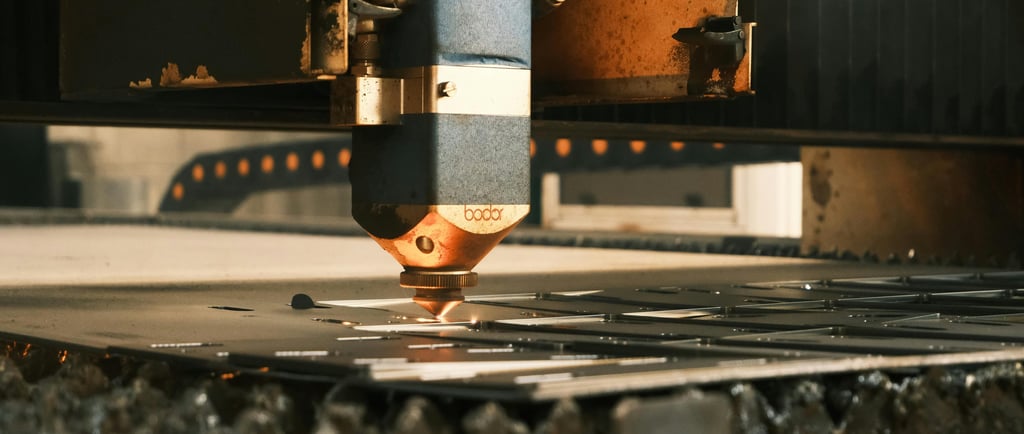
In contrast, laser cutting employs a high-powered beam—typically CO2 for non-metals or fiber for metals—focused through optics to precisely target the material. The beam heats the surface to extreme temperatures, causing melting, burning, or vaporization, while assist gases (like oxygen or nitrogen) blow away debris for clean edges. As a non-contact process, it minimizes mechanical stress and produces sealed, polished finishes.
Both technologies have evolved rapidly. Modern fiber lasers offer superior speed and efficiency for metals, while advanced 5-axis CNC machines handle intricate 3D machining. In Dubai's competitive landscape, providers integrate these with CAD/CAM software for seamless design-to-production workflows.
Key Differences in Accuracy, Cost, and Materials
Accuracy and Precision
Laser cutting generally achieves superior tolerances for 2D intricate work, often ±0.1mm or better, thanks to the narrow kerf (cut width) of 0.08-0.1mm. It excels in fine details, sharp corners, and complex patterns without tool marks. However, heat can create a small heat-affected zone (HAZ), potentially altering material properties in sensitive applications.
CNC cutting offers excellent precision (±0.01-0.05mm in advanced setups), particularly for 3D contours and depth control. Limited by tool diameter, it may leave slight radii on internal corners but avoids thermal distortion entirely.
Cost Considerations
Initial setup for laser cutting is often lower for prototypes and small runs, with faster processing reducing labor. Operational costs rise with thicker or reflective materials due to higher energy use. Maintenance is minimal, as there are fewer moving parts.
CNC cutting involves higher tool wear and replacement costs but proves economical for thick materials or high-volume production requiring durability. Setup time is longer due to fixturing and tool changes, but it avoids energy-intensive operations for dense stock.
Overall, laser is cost-effective for thin, detailed work; CNC for robust, volumetric removal.
Materials Compatibility
Laser cutting thrives on thin sheets: metals (steel, aluminum, stainless up to moderate thicknesses), acrylic, wood, fabrics, leather, paper, and composites. Fiber lasers handle reflective metals efficiently, but very thick or heat-sensitive materials pose challenges.
CNC cutting is more versatile for thicker stocks: hardwoods, dense plastics, foams, composites, and metals (including harder alloys). It avoids heat issues, making it ideal for materials prone to burning or warping.
Speed: Laser dominates thin, flat cuts; CNC for depth and heavy material removal.
Environmental factors also play a role—laser produces less physical waste but potential fumes; CNC generates chips but no thermal emissions.
Best Applications for CNC Cutting
CNC cutting shines in scenarios demanding depth, strength, and 3D complexity:
Furniture and Cabinetry: Precise carving, joinery, and shaping of thick wood or MDF for custom pieces.
Aerospace and Automotive: Milling thick metal parts, prototypes with pockets, holes, and threads.
Marine and Heavy Industry: Robust components from composites or dense materials requiring high structural integrity.
Signage and Packaging: 3D lettering, foam inserts, or layered composites.
Prototyping and Tooling: Substantial material removal for molds, dies, or functional parts.
In Dubai, CNC machining Dubai services support oil & gas (valves, flanges), construction (structural brackets), and manufacturing (custom machinery parts). Providers like Accurate Edge, Franz & Olsen, and Tornado CNC offer 5-axis capabilities for ultra-complex geometries, ensuring compliance with stringent standards.
Best Applications for Laser Cutting
Laser cutting is unmatched for speed, detail, and clean finishes on flat or thin work:
Signage and Decor: Intricate acrylic, wood, or metal letters; mashrabiya patterns for architectural screens.
Jewelry and Electronics: Fine engravings, PCBs, enclosures with tight tolerances.
Interior Design: Custom acrylic panels, fabric cuts, decorative elements.
Sheet Metal Fabrication: Automotive panels, medical devices, enclosures from thin steel or aluminum.
Prototyping: Rapid iteration on 2D designs with sealed edges, no secondary polishing.
Laser cutting Dubai excels in advertising, interiors, and events industries. Companies like Dinco Trading, Eminence Metal, Prestige UAE, and Sakher provide high-power fiber/CO2 systems for metals up to 12mm steel, serving architects, designers, and hobbyists with quick turnarounds.
Factors to Consider When Choosing a Service in Dubai
Dubai's fabrication sector is highly competitive, with industrial hubs in Al Quoz, Jebel Ali, and Ras Al Khor hosting ISO-certified providers equipped with Trumpf, Hwacheon, and other premium machinery.
Key decision factors include:
Project Specifications: Choose laser for 2D intricate cuts on thin materials; CNC for 3D features, thick stock, or heat avoidance.
Material and Thickness: Laser for sheets ≤12-20mm (depending on power); CNC for denser/thicker work without HAZ concerns.
Production Volume and Speed: Laser for low-medium runs with details; CNC for high-mix or specialized batches.
Budget and Total Cost: Get quotes—laser often cheaper for prototypes; CNC better for long-term durability.
Edge Quality and Finishing: Laser provides polished, sealed edges; CNC offers raw, heat-free finishes suitable for further processing.
Provider Capabilities: Seek modern equipment (fiber lasers, 5-axis CNC), CAD/CAM expertise, quality controls (CMM, ultrasonic), and value-added services (bending, welding, powder coating, engraving).
Turnaround and Location: Proximity ensures fast delivery; many offer 24/7 operations.
Certifications and Expertise: API, ISO standards critical for oil & gas; experience in your industry (e.g., marine on-site machining).
Conclusion
The choice in CNC cutting vs laser cutting hinges on balancing precision, material demands, cost, and application specifics. Laser cutting delivers unparalleled speed and intricacy for flat, detailed projects, while CNC cutting provides unmatched versatility for thick, complex, or heat-sensitive work.
In Dubai's innovative ecosystem, leveraging expert CNC machining Dubai or laser cutting Dubai services unlocks superior results. Consult providers early, share designs, and compare capabilities to optimize your project. With the right technology, you'll achieve efficiency, quality, and competitive edge in your endeavors.
Get in touch
Address
Sharjah Industrial area 10
Contacts
056 396 9006
info@lasercuttingsharjah.com