Call:056 396 9006
The Advantages of Laser Cutting Services in Dubai for Industrial Fabrication
LASER CUTTING DUBAILASER CUTTING SHARJAHCNC SERVICE SHARJAH
1/3/20268 min read
Structural Steel Cutting in Dubai
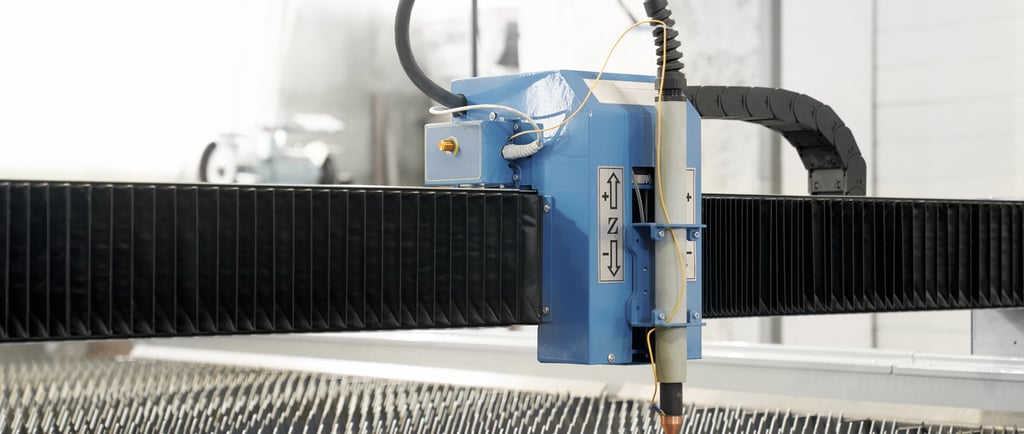
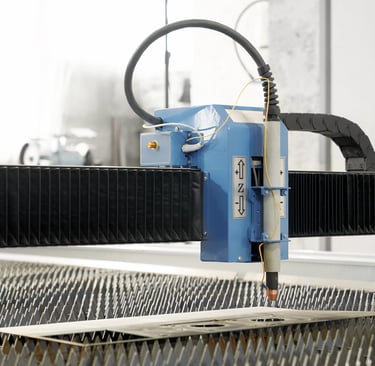
Laser cutting technology has revolutionized the fabrication of structural steel in Dubai, enabling manufacturers to achieve unparalleled precision and efficiency in their projects. This advanced technique utilizes a highly focused beam of light to cut through steel with exceptional accuracy. Unlike traditional cutting methods, laser cutting offers the capacity to create intricate designs and complex shapes, which is particularly beneficial for applications requiring high levels of detail.
One of the chief advantages of using laser cutting for structural steel is its ability to deliver improved accuracy. The technology minimizes the tolerances of cuts, ensuring that the final product fits perfectly in its intended application. This level of precision is critical in industries such as construction and manufacturing, where any discrepancies can lead to costly delays or require additional rework.
In addition to enhanced accuracy, laser cutting significantly reduces material waste. The narrow kerf generated by the laser beam means that less material is lost during the cutting process compared to traditional methods such as plasma or oxy-fuel cutting. As a result, businesses can optimize their raw material usage and experience direct cost savings. Furthermore, the efficiency of laser cutting translates into faster turnaround times, allowing companies to meet tight deadlines without compromising on quality.
Numerous industrial projects have leveraged laser-cut structural steel to enhance their output. For instance, architectural firms frequently employ laser-cutting techniques to create custom steel brackets and supports that meet specific design objectives. This capability has significantly expanded the potential of architectural designs, allowing for more innovative structures to emerge. The automotive industry also benefits from laser cutting for manufacturing chassis components that require precise measurements to ensure safety and performance.
Overall, the utilization of laser cutting services for structural steel guarantees a multitude of benefits including precision, reduced waste, and efficiency, facilitating significant advancements in industrial fabrication across various sectors.
Sheet Metal Fabrication
Laser cutting technology has revolutionized the field of sheet metal fabrication in Dubai, offering remarkable precision and efficiency. The process involves using a focused beam of light to cut through various types of metal sheets, allowing for intricately designed components with tight tolerances. One of the primary advantages of laser cutting is its ability to produce complex shapes and patterns that would be challenging, if not impossible, to achieve with traditional cutting methods. This level of detail is essential in industries that require bespoke solutions, such as aerospace, automotive, and architectural design.
Furthermore, laser cutting facilitates the production of multiple layers, which enhances the overall design flexibility. For instance, manufacturers can produce detailed components that consist of various parts laser cut from sheet metal, then layered for assembly. This not only reduces material waste but also accelerates the manufacturing process, leading to lower production costs. In addition to efficiency, laser-cut products often exhibit improved surface finishes, requiring less post-processing work.
Industries leveraging laser cutting technology for sheet metal fabrication include electronics, where precision is vital for circuit boards, and fabrication shops that require rapid prototyping of complex designs. Common applications of laser-cut sheet metal include custom enclosures for machinery, intricate signage, and decorative elements in building facades. The versatility of laser cutting not only improves the manufacturability of these products but also opens up new avenues for innovation in design and engineering.
Mass Production Advantages
Laser cutting services have emerged as a pivotal technology for industrial fabrication, particularly in the context of mass production. The efficiency afforded by laser technology allows manufacturers to achieve high-volume production runs while ensuring exceptional quality and precision in the final products. Unlike traditional cutting methods, laser cutting uses focused beams of light to cut through materials, which not only enhances speed but also reduces material waste. This efficiency is crucial in meeting the increasing demands of modern markets where rapid manufacturing capabilities are essential.
Moreover, the scalability of laser cutting services makes them suitable for various manufacturing needs. Companies can seamlessly scale their production processes from small batches to mass production without significant changes to their operational workflows. This adaptability allows businesses to respond more quickly to market demands, thus maintaining a competitive advantage. By leveraging laser cutting, firms can produce intricate designs and diverse components efficiently, making it an ideal choice for industries ranging from automotive to aerospace.
From a cost perspective, implementing laser cutting technology in production processes can yield significant benefits. The reduction in material waste translates to lower costs, while the increased speed of production can lead to higher output and profitability. Furthermore, laser cutting processes require minimal manual intervention, reducing labor costs and the potential for human error. In an environment where efficiency and cost-effectiveness are paramount, laser cutting services provide a viable solution that meets the rigorous demands of today’s industrial landscape.
Ultimately, as businesses increasingly seek ways to optimize production capabilities in competitive markets, the advantages of laser cutting services become clear. With high efficiency, scalability, and cost-saving benefits, laser cutting has become an indispensable tool for mass production in Dubai and beyond.
Quality Control Standards
In the realm of industrial fabrication, maintaining rigorous quality control standards is pivotal, particularly for laser cutting services. These standards ensure that the outputs not only meet the client's specifications but also comply with industry regulations. One of the primary quality benchmarks is the accuracy of the cuts produced. Laser cutting technology is renowned for its precision, capable of achieving tolerances as tight as 0.1 mm. This high level of accuracy minimizes waste and optimizes material usage, an essential factor in competitive manufacturing sectors.
Cleanliness of cuts is another crucial aspect of quality control in laser cutting services. The process generates minimal burrs and a smooth edge finish, which is critical for many applications, especially in sectors like aerospace and automotive. Providers must adhere to stringent cleanliness standards to ensure that the finished items are ready for immediate use or further processing without additional finishing operations. Regular inspections and assessments of the laser cutting surface quality are necessary to uphold this standard.
Compliance with relevant industry regulations cannot be overlooked. Laser cutting service providers are required to stay informed about the latest compliance criteria, which may include ISO certifications and safety standards. These regulations not only guide operational practices but also enhance consumer trust in the quality of the products. Furthermore, continuous training for personnel operating laser cutting equipment promotes adherence to these quality standards.
Regular maintenance and calibration of laser cutting machines are fundamental to sustaining high quality outputs. Equipment should undergo routine checks to ensure optimal performance and to avoid discrepancies that can arise from wear and tear. This proactive approach to machine upkeep minimizes breakdowns and extends the longevity of the equipment, contributing positively to the overall quality of the services provided. By following these established quality control measures, laser cutting service providers in Dubai can deliver superior fabrication solutions that align with market demands.
Project Timelines
In the realm of industrial fabrication, project timelines are critical to ensuring that objectives are met promptly and effectively, particularly when utilizing laser cutting services in Dubai. The efficiency intrinsic to laser cutting technology plays a significant role in determining the duration of projects, influencing every phase from the initial design to the final delivery.
Typically, laser cutting services can provide rapid turnaround for various projects, which may include anything from prototyping to large-scale production runs. For instance, a simple project involving the laser cutting of acrylic sheets may have a lead time of just a few hours to a day, depending on the design complexity and order volume. On the other hand, more intricate designs, such as those requiring precision cuts in metal materials, may extend the timeline to several days or even weeks, as the intricacies of design and material handling come into play.
Several factors influence project timelines in laser cutting services. The complexity of the design is paramount; more complicated shapes may necessitate advanced programming and setup time, thereby prolonging the project duration. Additionally, the type of material selected for cutting can also impact timelines. For example, thicker metals may require slower cutting speeds, which can add time to the project. Finally, order volume plays a crucial role—larger quantities often enable bulk processing but may also require coordinated scheduling that can lead to lengthier timelines due to resource allocation.
Ultimately, trusting a reliable laser cutting service provider in Dubai can significantly enhance the efficiency and speed of project timelines, making it imperative for businesses to consider these advantages when planning their fabrication needs.
Customization and Innovation in Design
One of the defining advantages of laser cutting services in Dubai for industrial fabrication is the remarkable degree of customization and innovation they offer. This advanced technology enables businesses to produce intricate designs and unique products that meet specific client requirements. Unlike traditional cutting methods, laser cutting utilizes a focused beam of light to achieve precise cuts and engravings, allowing for exceptional detail and accuracy.
The flexibility of laser cutting technology is particularly beneficial for industries that require bespoke components or one-of-a-kind designs. Whether it is creating custom signage, intricate patterns for architectural elements, or personalized industrial equipment, laser cutting allows businesses to push the boundaries of creativity. This capability ensures that products not only meet functional specifications but also resonate aesthetically with customers.
Moreover, the rapid turnaround times associated with laser cutting mean that innovations can quickly transition from concept to prototype, and eventually to production. This speed facilitates a more dynamic design process, enabling companies to adapt to market trends and client feedback more effectively. As a result, businesses leveraging laser cutting services can stay ahead of the competition by offering tailored solutions that address the evolving needs of their customers.
Several successful projects exemplify the power of customization through laser cutting. For example, a Dubai-based company recently utilized laser technology to produce a series of bespoke metal sculptures for a public art installation. Each piece featured unique geometric designs that were tailored to reflect the cultural heritage of the community. Such initiatives highlight the potential of laser cutting to enhance both functionality and aesthetics in industrial design.
In conclusion, the versatility offered by laser cutting services in Dubai empowers businesses to innovate and customize their products. By harnessing this technology, companies can deliver solutions that are not only practical but also creatively aligned with consumer expectations.
Conclusion and Future Trends in Laser Cutting
In summary, the advantages of laser cutting services in Dubai for industrial fabrication are undeniable. The precision, efficiency, and versatility of laser cutting technology make it an invaluable asset for a range of industries, from aerospace to automotive and beyond. We have explored the various benefits that laser cutting offers, such as reduced material waste, enhanced product quality, and the ability to work with diverse materials. As industries continue to evolve, the importance of these services in Dubai will only increase.
Future trends in laser cutting technology indicate significant advancements are on the horizon. As laser systems evolve, we can expect improvements in speed and accuracy, along with the introduction of more sophisticated control systems. Innovations like fiber lasers and the integration of artificial intelligence into laser cutting processes are likely to enhance overall performance. Furthermore, with the growing focus on sustainability, there will be an increased demand for materials that can be efficiently processed through laser cutting, such as eco-friendly composites and advanced alloys.
The expansion of laser cutting services in Dubai signals a vibrant future for industrial fabrication in the region. With the increasing adoption of this technology across various sectors, companies will benefit from improved production capabilities and the ability to meet complex design requirements. As businesses seek to stay competitive, investing in advanced laser cutting services will be crucial, propelling operational efficiency and fostering innovation.
In conclusion, the future of laser cutting services in Dubai looks promising, as technological advancements and an expanding range of applications will drive growth and enhance industrial fabrication capabilities. The potential impact of these developments will redefine operational standards and open up new avenues for businesses in Dubai.
Get in touch
Address
Sharjah Industrial area 10
Contacts
056 396 9006
info@lasercuttingsharjah.com